Share the page

Promoting Social Cohesion and Reducing Inequalities in Latin America and Caribbean
Project
-
Project start date
-
-
Project end date
-
-
Financing amount (Euro)
-
€43Million
-
Country and region
-
Colombia, Costa Rica, Mexico, Uruguay, Argentina, Brazil, Cuba, Dominican Republic, Chile, Bolivia
-
Funders

The Inclusive Societies Regional Programme aims to reduce inequalities, poverty and social exclusion while streghthening social cohesion across Latin America and the Caribbean (LAC). By promoting gender equality, inclusive governance and just green and digital transitions the programme seeks to ensure that the benefits of sustainable development reach the most vulnerable populations.
Latin America and the Caribbean (LAC) are currently facing a challenging global geopolitical and economic environment characterised by uncertainty and a series of crises. Despite ongoing efforts, the region is struggling to recover from the social and economic impact of the COVID-19 pandemic and return to the financial levels of 2019. According to the Economic Commission for Latin America and the Caribbean (ECLAC, 2022), inflation rates are high, and labour informality is growing. The pandemic added almost 50 million more people to the poverty line, and the region is trying to reduce poverty and inequality while experiencing a precarious recovery of jobs. The region continues to face high levels of inequality, particularly regarding income, making it one of the most unequal regions in the world.
Against this backdrop, strengthening social cohesion and ensuiring equitable access to opportunities are essential to building more resilient and inclusive societies.
Building on commitments of the third EU-CELAC Summit held in July 2023, the programme reflects the long-standing bi-regional partnership between the European Union (EU) and Latin America and the Caribbean (LAC). The programme contributes to the the implementation of the social dimension of the Global Gateway Investment Agenda (GGIA) with a 360° approach, ensuring that investments generate inclusive benefits, particularly for the poorest 40%. Though a participatory and multi-stakeholder approach to the GGIA, it provides an opportunity for collaborations among the public, private and non-profit sectors in their respective roles.
The Project main objective is to contribute to tackle gender and other inequalities, reduce poverty and social exclusion, and enhance social cohesion within and between LAC countries, structured around 3 complementary priorities:
- Equality and social rights : expanding equal access to social services, and justice for vulnerable groups
- Governance and citizenship : strengthening transparent and inclusive public institutions by promoting inclusive public finance models
- Just transitions : supporting skills development to boost social innovation, the resilience of social systems
The Project is funded by the EU (DG INTPA) and implemented by six partners that have a strong commitment to work together with other EU Member States and partner countries to address global challenges, mitigate their consequences and allow a social, green, and digital transition while upholding human rights, democracy, good governance, the rule of law and gender equality.
Strenthening gender equality equitable access to social rights
The first lever for action of this programme focuses on gender equality and equal access to social protection, health and care policies for vulnerable groups in all their diversity, notably women, children, and youth, and the bottom poorest 40% income or wealth households. The goal of this component is to promote a more stable and equitable social environment based on inclusive access to social rights and services. Therefore fostering the implementation of social policies that provide societies with the capabilities to optimize the success and share the benefits of the green and digital transitions.
Gender equality policies and women’s empowerment
The programme strengthens-regional collaboration on gender equality and to forge alliances between the EU and LAC at country, regional and global levels.
Key activities include :
- Supporting national equality mechanisms for the design and implementation of national and regional gender strategies and for incorporating the gender approach.
- Promoting women’s empowerment and measures of economic, financial, and social autonomy.
- Supporting the prevention of and sanction against gender-based violence and related physical autonomy measures.
- Supporting inclusive leadership and women’s equal participation in decision-making.
- Promoting multidimensional assessments of inequality at the national and/or subnational level.
Social protection and care policies
To reduce poverty and strengthen social resilience, the project supports policy frameworks that promote equitable access, sustainable financing and innovative approaches to enhance social protection and to ensure its adequacy to tackle poverty and inequalities.
Activities focus on:
- Supporting social protection systems.
- Supporting comprehensive and gender-transformative national care systems.
- Promoting public-private strategies to support targeted investment opportunities in the care economy across the life cycle.
Equitable Access to Health
- Supporting the EU-LAC Partnership on Health Resilience and Equitable Access to Health Products.
- Improving access to essential medicines, vaccines, diagnostics and devices for primary health care.
- Supporting health insurance system expansion and universal coverage in coordination with social protection initiatives.
Strengthening democratic governance and equitable access to public resources
This component supports more inclusive, accountable, and transparent public institutions promoting equity-driven and gender-responsive public finance models to reinforce social policies and protection systems. It addresses Public Financial Management and Revenue Administration and strengthen democratic governance with an Open Government approach as a key enabler for 360º GGIA investments.
Interventions will reinforce the principles that are at the heart of Global Gateway, guiding the investments, particularly democratic values and high standards, good governance and transparency, and equal partnerships.
Public financial management and revenue
Its activities aim to help public institutions allocate and manage resources more effectively, ensuring that budgetary decisions contribute to all. It also focuses on improving revenue mobilisation, strengthening institutional capacities and making tax systems more equitable and sustainable by :
Quality of public spending:
- Enhancing gender-transformative, youth-oriented, green budgeting frameworks in all phases of the budget cycle.
- Supporting public procurement and concessions practices, prioritizing quality, and incorporating environmental, social, gender and innovation criteria.
Revenue administration:
- Promoting digitalisation for better data governance, control, and taxpayer services.
- Promoting the modernisation of the tax system for equitable, inclusive, and sustainable growth by addressing the progressivity of the tax system.
- Promoting the revision of tax incentives to support sustainability and social inclusion.
Open Government: transparency, citizen participation and collaboration
- Improving fiscal and budget transparency, business-to-government (B2G) data sharing to improve public services and supporting Open Contracting by connecting governments, citizens and businesses through data.
- Inclusion of civil society, the private sector and other stakeholders in public consultations and other citizen participation mechanisms.
- Promoting Tripartite Social Dialogue - Multi-dialogues’ to ensure decent work in line with international labour standards
Promoting just transitions
his Component will focus on supporting initiatives aligned with just green and digital transitions promoting inclusive education, skills and employment policies and accompanying actions to underpin the implementation of GGIA projects.
Prioritising human development and social cohesion in the EU-LAC Global Gateway Investment Agenda, it is crucial to have a functional ecosystem that fosters labour inclusion effectively through an articulation between productive, employment, education and vocational training policies.
Support to Global Gateway Initiatives
- Promoting TVET for young people, especially women, to enhance their employability and facilitate job placement in investment projects.
- Supporting for employment plans based on job opportunities generated by Global Gateway Investment Agenda initiatives.
- Developping local demonstration projects to strengthen Global Gateway Investment Agenda initiatives in the territories and maximize their social impact.
National and subregional labor market policies linked to Global Gateway priorities
- Supporting the reconversion of sectors and territories affected by transitions, using the tools of TVET, retraining, and employment programs.
- Supporting national programs and measures that promote employment in the green and digital transitions.
- Developping green profiles and competencies within the framework of the Pacific Alliance.
Care Economy around Global Gateway Initiatives
- Supporting the expansion of care services.
- Supporting care policies: professionalization, certification, and formalization of caregivers.
- Promoting new public-private investments in key sectors that generate employment opportunities.
Improving the inclusion and quality of education in the Global Gateway ecosystem
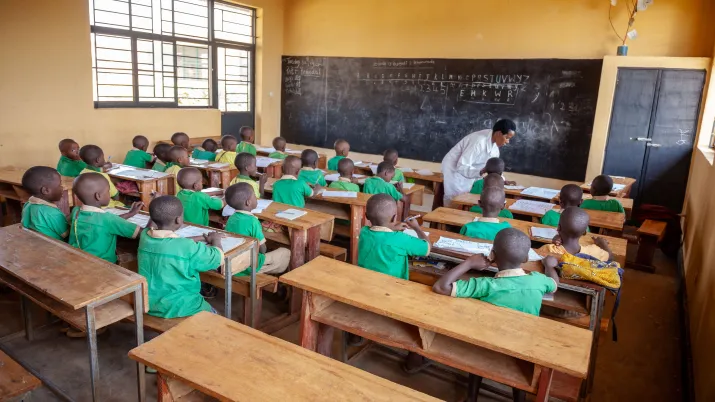
- Supporting better educational quality and inclusion programs, student retention, teacher training, and basic skills.
- Supporting access education measures and children education promotion (including care).
More about the project
Sustainable Development Goals
SDG10 - Reduced inequalities
Reduce inequality within and among countries
SDG5 - Gender equality
Achieve gender equality and empower all women and girls
SDG16 - Peace, justice and strong institutions
Promote just, peaceful and inclusive societies
SDG4 - Quality education
Ensure inclusive and equitable quality education and promote lifelong learning opportunities for all
SDG8 - Decent work and economic growth
Promote sustained, inclusive and sustainable economic growth, full and productive employment and decent work for all
SDG11 - Sustainable citites and communities
Make cities and human settlements inclusive, safe, resilient and sustainable
Similar projects
In the News
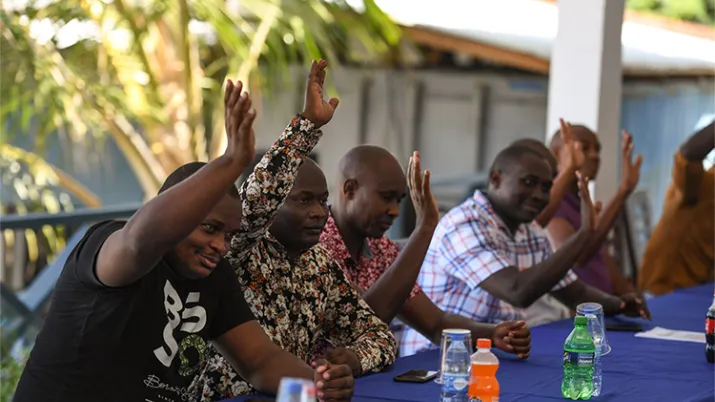
Back to school: for secondary education that takes into account everyone’s needs
Published on September 2, 2026